When working in wet or challenging environments, choosing the right waterproof work boots is essential. According to a report by the Footwear Industry Association, nearly 40% of workers experience foot-related problems due to inappropriate footwear. Waterproof work boots not only protect against moisture but also provide comfort during long hours on the job. Industry expert John Miller states, “Your boots are your foundation; invest wisely, or you’ll pay the price in discomfort.”
Comfortable waterproof work boots can help maintain productivity and morale. Many workers underestimate the impact of poor-quality footwear. Wearing subpar boots can lead to slips and injuries. Moreover, the right pair should have moisture-wicking linings and durable outsoles to ensure safety and comfort. This reflects the significance of considering factors like fit, functionality, and material.
However, even the best boots may fail if not properly maintained. Regular cleaning and inspection are vital. Many users overlook this aspect, diminishing the boots' lifespan and effectiveness. Making an informed choice about waterproof work boots includes understanding personal needs, job demands, and boot specifications. Balancing comfort, durability, and maintenance is key.
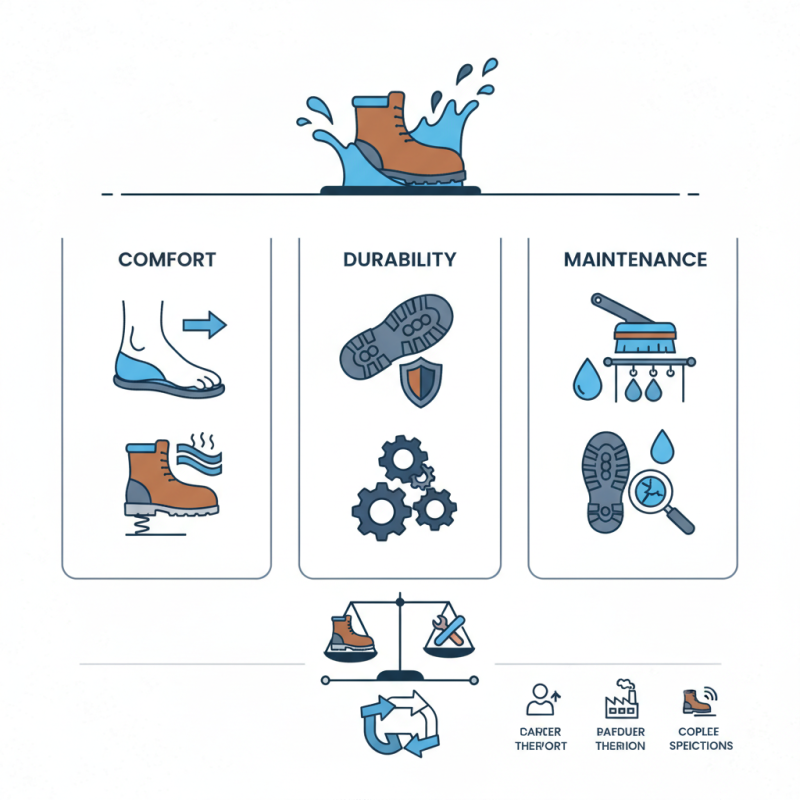
Choosing the right waterproof work boots is essential for comfort and performance. When you work in wet conditions, your feet can become cold and uncomfortable. Waterproof boots protect against moisture, ensuring your feet stay dry and warm throughout the day. This choice can significantly affect your productivity and overall well-being.
To make an informed decision, think about the work environment. Will you be on your feet for long hours? Do you encounter slippery surfaces? These factors will influence the type of waterproofing technology you need. Look for materials that offer breathability while keeping moisture out. Recognizing the balance between waterproofing and comfort is crucial.
Tips: Check the boot's weight. Heavy boots can lead to fatigue. Pay attention to the fit; a snug but comfortable fit is vital. Don’t ignore the importance of insulation. It makes a difference in cold conditions. Always remember, the right choice may not always be the most popular one. Sometimes, you need to dig deeper into user reviews and performance reports. Consider your comfort needs and be open to trying different options.
Choosing the right waterproof work boots demands attention to specific features. A good boot should have proper sealing against water. Look for boots with sealed seams or waterproof membranes. These traits help keep your feet dry in wet conditions. Breathability is also essential. Stuffy boots can cause discomfort. Materials like Gore-Tex allow moisture to escape while keeping water out.
The sole of the boot plays a crucial role too. A slip-resistant outsole is vital, especially in slippery environments. Chasing safety, you want a firm grip on various surfaces. Cushioning features can add comfort for long hours of wear. Consider the midsole and insole when evaluating support. Remember, not all boots fit every foot type. It’s crucial to try them on and walk around. A snug fit prevents blisters but allows some wiggle room for your toes.
Weight matters as well. Heavier boots can tire you out faster. Choose lighter materials that still offer protection. Reflect on how often you will wear them. The best waterproof work boots should balance comfort, durability, and protection. Keep in mind that spending more doesn't always guarantee better quality. Sometimes, a simple design does the job. A thoughtful decision now can lead to satisfaction later.
Choosing the right waterproof work boots for comfort requires consideration of several factors. One key aspect is the fit. Boots should be snug but not restrictive. Proper sizing includes accounting for foot shape and arch type. A good fit prevents blisters and allows for prolonged wear without discomfort.
Material plays a significant role in comfort too. Waterproof materials often influence breathability. Leather and synthetic options each have distinct characteristics. While leather is durable, synthetics can offer lighter weight and flexibility. Remember, you’ll need a balance between waterproofing and comfort.
**Tips:** Always try on boots with the socks you plan to wear. Walk around to test flexibility and comfort. Consider insoles; they can transform a good fit into a perfect one.
Another consideration is weight. Lightweight boots can enhance mobility and reduce fatigue. However, overly lightweight designs may compromise durability. Think about your daily tasks—heavy-duty work may require more robust options.
**Tips:** Check reviews for insights on long-term comfort and durability. Assess your work environment to make an informed decision. Comfort isn’t just about the initial fit; it’s about how boots perform over hours of use.
Choosing the right waterproof work boots requires careful attention to fit and sizing. A snug yet comfortable fit prevents blisters and discomfort during long hours on the job. To achieve this, measure your feet properly at the end of the day. Feet often swell throughout the day, so this helps capture the right size. Don’t forget to wear the socks you plan to use with the boots during measurements.
When trying on boots, pay attention to the toe box. It should provide enough space for your toes to wiggle. If you feel cramped, the size might not be right. Similarly, assess the heel area. There should be minimal slipping; excessive movement can lead to blisters. Take a few steps in the boots to see how they feel.
It’s vital to note that resizing can vary among styles and models. A boot that fits perfectly in one style may feel too tight in another. Reflect on these issues as you explore your options. Trying on different pairs can reveal surprising differences. Finding the perfect waterproof work boots enhances comfort and ensures safety on the job.
When searching for the best waterproof work boots, consider their features and brand reputation. Several brands stand out for their durability and comfort. Look for those that prioritize high-quality materials. A reputable brand often reflects a commitment to providing a reliable product. Comfort is essential for long hours on your feet.
Tips: Assess the fit before buying. A snug fit prevents blisters while allowing room for socks. Check the sole materials; rubber or polyurethane offers excellent grip. Also, consider insulation if working in cold conditions. Make sure the waterproofing is tested in real environments.
Some brands focus on lightweight designs, while others emphasize rugged construction. Don't shy away from trying different options. What works for one person may not suit another's needs. Explore various price points, as the most expensive is not always the best. Notice how a boot feels as you walk around. Comfort can often be overlooked in the shopping process.
| Model | Material | Waterproof Rating | Comfort Features | Weight | Price Range |
|---|---|---|---|---|---|
| Model A | Leather | IPX7 | Cushioned Insole, Arch Support | 3 lbs | $120 - $150 |
| Model B | Synthetic | IPX6 | Memory Foam, Breathable Lining | 2.5 lbs | $100 - $130 |
| Model C | Rubber | IPX8 | Steel Toe, Shock Absorption | 4 lbs | $150 - $180 |
| Model D | Nubuck | IPX5 | Padded Collar, Anti-Slip Sole | 3.2 lbs | $110 - $140 |
: Look for proper sealing against water, such as sealed seams or waterproof membranes.
Breathability is essential to prevent discomfort and moisture buildup inside the boots.
A slip-resistant outsole is crucial for a firm grip in slippery environments.
Measure your feet at the end of the day and wear the socks you will use during measurements.
Ensure the toe box has enough space and that there’s minimal slipping at the heel.
Heavier boots can tire you out faster, so opt for lighter materials that offer protection.
Yes, a reputable brand often indicates a commitment to durability and comfort.
No, sizing can vary, so what fits in one style might feel tight in another.
Make sure the waterproofing has been tested in real environments before buying.
Not necessarily; sometimes, a simple design works just as well for your needs.
Choosing the right Waterproof Work Boots is essential for anyone who spends long hours in challenging environments. Understanding the importance of these boots goes beyond just keeping feet dry; it ensures safety and enhances overall comfort during demanding tasks. Key features to consider include material quality, insulation, and slip resistance, all of which contribute to a reliable boot that performs well under various conditions.
Comfort in Waterproof Work Boots is influenced by several factors, including cushioning, arch support, and the boot's overall fit. To achieve optimal comfort, it’s crucial to evaluate fit and sizing carefully, taking into account the specific needs of your feet. By exploring the top brands and their offerings, you can find a pair that balances durability, functionality, and comfort, making your work experience much more enjoyable.
